
Anorectal Surgery
Advanced & Painless Haemorrhoids (Piles) Treatment in Chennai
Reclaim your comfort with modern, minimally invasive and laser-assisted treatment designed for quick recovery.
Book a consultation +91 93603 91740
- 28+ yearsin practice
- 20,000+laparoscopic surgeries
- last updated
- BillrothShenoy Nagar
Key facts about Haemorrhoids (Piles)
- Condition
- Haemorrhoids (Piles)
- Speciality
- Anorectal Surgery
- Approach
- Laser and stapler procedures where suitable
- Treated by
- Dr. Kumaragurubaran
- Hospital
- Billroth, Shenoy Nagar
- Consultations
- Mon–Sat, no referral
What is Haemorrhoids (Piles)?
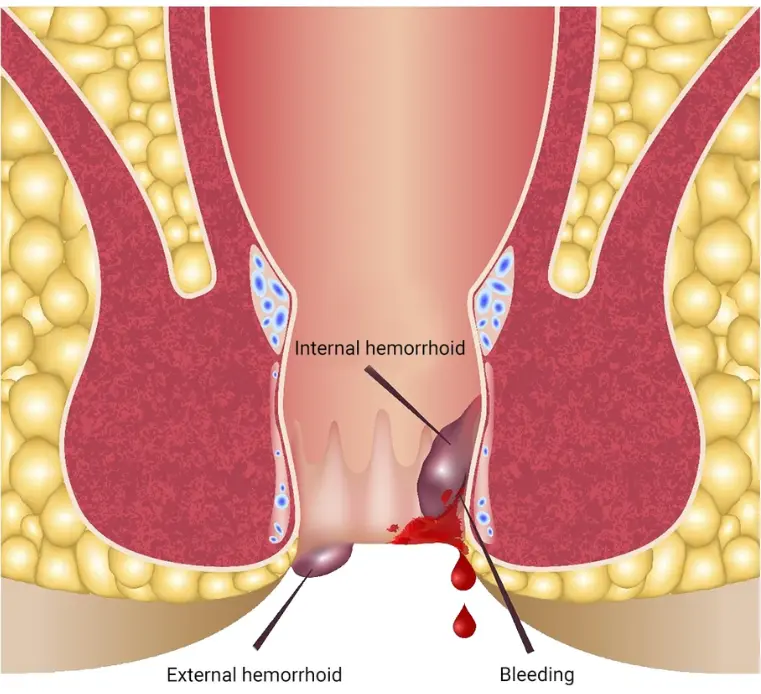
Haemorrhoids, commonly known as piles, are swollen blood vessels in and around the skin of the anus and lower rectum. They are caused by increased pressure in the lower rectum, chronic constipation, straining during bowel movements, prolonged straining or pregnancy.
They may cause bleeding during bowel movements, itching, discomfort, swelling or tissue protruding from the anal opening. Treatment depends on the type of haemorrhoids, their severity and the symptoms the patient experiences.
The different types of haemorrhoids
- Internal haemorrhoids — develop inside the rectum and may cause painless bleeding or protrusion during bowel movements.
- External haemorrhoids — develop beneath the skin around the anus and may cause swelling, irritation or pain.
- Prolapsed haemorrhoids — internal haemorrhoids that extend outside the anus during bowel movements, or remain outside.
The grades of piles
- Grade 1 — the piles stay inside the anus.
- Grade 2 — the piles project outside the anus during defecation and reduce on their own afterwards.
- Grade 3 — the piles project outside after defecation and have to be pushed back in by hand.
- Grade 4 — the piles stay outside and cannot be reduced.
The grade and the presence of complications are what determine which treatment is appropriate.
Advanced and painless piles treatment in Chennai
For people seeking the best haemorrhoids treatment in Chennai, Dr Kumaragurubaran at Billroth Hospitals, Shenoy Nagar, provides surgical consultation and advanced treatment across the full range of anorectal surgery. Treatment may involve dietary changes, medication, a minimally invasive procedure or surgery, depending on the diagnosis and the individual clinical picture.
Common symptoms of piles
Symptoms vary with the location and severity of the haemorrhoids. The usual signs are:
- Bright red blood during or after passing stools
- Itching or irritation around the anal opening
- Swelling or a lump near the anus
- Discomfort or pain, particularly when a haemorrhoid becomes thrombosed
- Tissue protruding during bowel movements
- Difficulty maintaining comfortable bowel movements because of associated constipation
Rectal bleeding should never simply be assumed to be piles. Anal fissure, fistula-in-ano, inflammatory bowel disease, polyps, rectal cancer and other colon disorders can produce similar symptoms. Persistent or unexplained bleeding needs proper medical evaluation.
What causes haemorrhoids?
Haemorrhoids develop when the supporting tissues and blood vessels in the anorectal region become enlarged or displaced. The usual contributing factors are:
- Chronic constipation and repeated straining during bowel movements
- A diet low in fibre
- Prolonged sitting on the toilet
- Pregnancy, and increased pressure in the pelvic region
- Age-related weakening of the supporting tissues
- Repeated heavy lifting, or activities that raise abdominal pressure
Managing constipation, drinking enough water and increasing fibre intake all reduce straining and support bowel health.
How are haemorrhoids diagnosed?
An accurate diagnosis separates piles from other anorectal conditions and decides the treatment.
- Medical history — symptoms, bowel habits, how long the bleeding has gone on, and any previous treatment.
- Physical examination — of the area around the anus, to identify external haemorrhoids, swelling or prolapse.
- Rectal examination — performed where appropriate to assess the anorectal region.
- Proctoscopy — a short instrument used to examine the anal canal and lower rectum.
- Further investigation — sigmoidoscopy or colonoscopy where symptoms, age, risk factors or examination findings indicate the colon should be evaluated.
Not every patient needs every investigation. The assessment is matched to the symptoms and the findings.
What is the best treatment for piles?
There is no single treatment that is best for every patient. The right approach depends on the type and grade of the haemorrhoids, and may be conservative management, an outpatient procedure or surgery.
1. Medical management and lifestyle changes
Mild haemorrhoids often improve with measures that reduce constipation and straining — more dietary fibre, adequate fluids, regular activity and medication where a doctor advises it. These help with symptoms but will not usually resolve advanced or persistently prolapsing haemorrhoids.
2. Sclerotherapy
A suitable solution is injected into selected internal haemorrhoids, reducing the affected tissue. Appropriate for certain early-stage cases, usually Grade 1.
3. Rubber band ligation
A small band is placed around the base of an internal haemorrhoid to cut off its blood supply. Considered for internal haemorrhoids needing more than conservative management, usually Grade 2.
4. Haemorrhoidectomy
A surgical procedure to remove haemorrhoidal tissue. Recommended for advanced, large or persistent haemorrhoids where other options are unsuitable or have not worked — usually Grade 3 to Grade 4. The anaesthesia and recovery plan depend on the patient's condition.
5. Stapler haemorrhoidopexy (PPH)
Used for selected cases of prolapsing internal haemorrhoids, usually Grade 3. A specialised stapling device repositions the prolapsing tissue and removes a circular section of tissue above the haemorrhoids. Pain is usually much less and recovery faster, but it is not suitable for every type of pile, and the benefits and risks should be discussed with the surgeon.
6. Laser treatment — laser haemorrhoidoplasty
A modern, minimally invasive procedure using precise laser energy to shrink the haemorrhoidal vessel from within, without cutting or removing tissue. It preserves the anal sphincter, causes minimal pain and allows early discharge.
Laser is not automatically the best option for everyone. Its suitability depends on the severity of the haemorrhoids, whether there is prolapse, and the surgeon's assessment.
7. Haemorrhoidal artery ligation (HAL)
The arteries supplying the haemorrhoids are identified and tied off, often with Doppler guidance, shrinking the piles by cutting off their blood supply. It may be considered for selected patients, sometimes alongside a procedure to address prolapse.
Is laser piles treatment suitable for everyone?
Laser treatment may be an option for selected patients, but the choice should follow an examination rather than the name of the procedure. Before recommending it, the surgeon considers:
- The type and grade of the haemorrhoids
- Whether the main symptom is bleeding, pain or prolapse
- Previous treatments, and whether they worked
- Any other anorectal condition needing attention
- The expected benefits, the limitations and the possible complications
Patients should understand the alternatives, the likely recovery and the full cost before deciding on any procedure.
Classical versus laser haemorrhoidectomy
Both remove the problem; they differ in how. The figures below describe a typical case — your own plan is decided after examination.
| Feature | Classical (traditional) | Laser haemorrhoidoplasty |
|---|---|---|
| How it works | Cuts away haemorrhoidal tissue using a scalpel or electrocautery | Uses targeted laser heat to shrink blood vessels and collapse tissue, without cutting |
| Pain level | Higher — significant pain during recovery and bowel movements | Lower — minimal nerve disruption |
| Recovery time | 2 to 4 weeks | 3 to 7 days |
| Wound care | Active wound care, sitz baths and hygiene for open or stitched incisions | Minimal to no open wounds; lower infection risk |
| Best for | Severe Grade 4, large prolapsed, or mixed external haemorrhoids | Symptomatic Grade 2 and Grade 3 internal haemorrhoids |
| Recurrence risk | Lowest — the gold standard for severe cases | Low for Grade 2 and 3; higher if used on Grade 4 |
Classical haemorrhoidectomy is not an inferior operation. For severe disease it remains the most durable answer, and that is precisely why it is still offered.
When is piles surgery necessary?
Surgery is considered when haemorrhoids cause persistent bleeding, significant prolapse, recurring symptoms or other problems that do not respond adequately to conservative treatment or office-based procedures.
A piles specialist can assess the condition and explain whether medication, banding, laser treatment or surgery is appropriate. The decision takes account of the diagnosis, the symptoms, the medical history and the patient's own preferences.
Seek medical assessment promptly for severe pain, heavy bleeding, fainting or black tarry stools. These are not for routine self-treatment.
About Dr Kumaragurubaran
Dr Kumaragurubaran is a Senior Surgical Gastroenterologist and Advanced Laparoscopic, GI and Robotic Surgeon at Billroth Hospitals, Shenoy Nagar, Chennai.
He has more than 28 years of experience in the treatment of piles, extensive experience in laser treatment for piles, and has treated thousands of patients successfully. His qualifications include MBBS, MS (General Surgery), MRCS (England), FIAGES (Gastro), FALS (Colorectal, Bariatric, Hernia, Robotic) and Dip. ALS (Advanced Laparoscopy).
Alongside piles he treats the full range of anorectal conditions, including anal fissure, fistula-in-ano and rectal prolapse.
Consult a piles specialist in Chennai
Haemorrhoids can usually be managed well once the diagnosis and the approach are right. The options run from conservative measures through banding, sclerotherapy, stapler haemorrhoidopexy and laser treatment to haemorrhoidectomy for advanced disease.
A consultation lets you understand your condition, review the options and decide. Book a consultation, or get in touch with the practice. Bring any previous reports with you — a second opinion on treatment advised elsewhere is routine.
Why patients choose this practice
Diagnosis before decision
No operation is scheduled on a guess. Many patients who arrive expecting surgery leave with a treatment plan instead.
Costs in writing, first
A written estimate covering surgeon, theatre, anaesthesia, implants and expected stay before you are asked to consent.
Treatment matched to the condition
Not every problem needs an operation. Where medicine, endoscopy or a day-care procedure is the better answer, that is what is recommended.
Second opinions
If surgery has been advised elsewhere, bring the scans and the plan. Reviewing another surgeon’s recommendation is routine.
About the surgeon

Treated by
Dr. Kumaragurubaran
Senior Surgical Gastroenterologist, Advanced Laparoscopic, GI & Robotic Surgeon
MBBS, MS (General Surgery), MRCS (England), FIAGES (Gastro), FALS (Colorectal, Bariatric, Hernia, Robotic), Dip. ALS (Advanced Laparoscopy)
Gastroenterologist, GI & Laparoscopic Surgeon at Billroth Hospitals in Shenoy Nagar, Chennai. Treats Hernia, Reflux, Gallstones, Obesity, Colorectal, Gastrointestinal and Anorectal conditions, and provides medical treatment for GERD, Gastritis, Peptic ulcer, Jaundice, Pancreatitis, Colitis and IBD.
Haemorrhoids (Piles): frequently asked questions
Which doctor treats piles in Chennai?
A qualified surgeon experienced in anorectal conditions can diagnose and treat piles. Dr Kumaragurubaran at Billroth Hospitals, Shenoy Nagar, Chennai provides surgical consultation and treatment for anorectal conditions, and will discuss the appropriate options.
Can piles be treated without surgery?
Yes. Some cases improve with dietary changes, constipation management and medicines recommended by a doctor. Procedures such as sclerotherapy or rubber band ligation may also be suitable for selected patients. Advanced or persistent cases may require surgery.
Is laser treatment effective for piles?
Laser treatment can manage selected haemorrhoids well. Its suitability and outcome depend on the type and severity of the condition and the technique used. A surgeon can explain whether laser or another option is right for you.
Is laser piles treatment completely pain free?
Laser haemorrhoidoplasty is considerably less painful than traditional surgery, but it is not completely pain free.
When should piles be operated on?
Surgery may be recommended for persistent symptoms, significant prolapse, or haemorrhoids that do not respond adequately to other treatment. The decision follows a clinical assessment and a discussion of the alternatives.
How long does recovery after piles surgery take?
Recovery varies with the procedure, the severity of the condition and the patient's general health. As a guide, laser haemorrhoidoplasty usually takes 3 to 7 days and classical haemorrhoidectomy 2 to 4 weeks. Your surgeon gives individual instructions on wound care, bowel habits, medication and returning to normal activity.
Do all haemorrhoids cause bleeding?
No. Some cause itching, swelling or prolapse without any bleeding. Equally, rectal bleeding can have causes other than haemorrhoids, so persistent or unexplained bleeding should always be evaluated.
Can piles come back after treatment?
Laser treatment effectively removes the existing haemorrhoids, but symptoms can recur depending on the procedure, bowel habits and contributing factors. Adequate fibre, avoiding excessive straining and following medical advice all reduce the risk of new piles developing.
What are the grades of piles?
Grade 1 stays inside the anus. Grade 2 comes outside during defecation and goes back on its own. Grade 3 comes outside and has to be pushed back by hand. Grade 4 stays outside and cannot be pushed back. The grade largely decides which treatment is appropriate.
Medically reviewed by Dr. Kumaragurubaran, Surgical Gastroenterologist
Next step
Discuss Haemorrhoids (Piles) with Dr. Kumaragurubaran
Bring any scans or reports you already have. You will be told plainly what is wrong, what the options are, and what happens if nothing is done.